

Millions of engineers, scientists, and technology professionals around the world dream of working at NASA. The agency leads the most ambitious projects in human spaceflight, planetary exploration, Earth science, and aeronautics — and naturally, foreign workers want to know whether NASA jobs for international applicants are really within reach. The short answer is nuanced: most direct NASA positions are reserved for U.S. citizens, but several realistic routes still exist into the global space industry, including NASA-related work.
The key issue is that NASA is a federal government agency. That single fact shapes everything — who can be hired, which internship programs accept applications, and what alternatives make sense when direct employment is not possible. Understanding these rules before you invest months into applications can save you from disappointment and wasted effort.
In this 2026 guide, you will learn the exact eligibility rules for NASA civil-service jobs and internships, the career fields the agency hires in, how federal pay works, the practical alternatives for non-U.S. citizens — including contractors, partner space agencies, and private space companies — plus the step-by-step application process and how to spot fake job scams.

Can International Applicants Work for NASA?
For most direct NASA jobs, the answer is no. NASA’s official careers guidance states that with extremely rare exceptions, a person generally must be a U.S. citizen to work for the agency as a civil-service employee. This is not a matter of preference — it is a federal employment requirement tied to national security, export-control regulations, and the sensitive nature of much of NASA’s technology.
Being academically qualified does not override this rule. An engineering degree from a top university and years of research experience will not make a non-U.S. citizen eligible for a standard NASA federal position. NASA itself advises international applicants to look instead toward international space partners or industry partners that collaborate with the agency.
The word “extremely rare exceptions” is doing a lot of work in NASA’s guidance. These exceptions exist on paper for very specialized circumstances, but they are not something an ordinary applicant can plan around. Treat direct civil-service employment as unavailable and focus your energy on the genuine alternatives described below.
NASA Jobs for International Applicants: Quick Overview
Here is the current situation at a glance, so you can see exactly where you stand before reading further:
| Path | Current Situation |
|---|---|
| Direct NASA civil-service jobs | Generally limited to U.S. citizens |
| NASA OSTEM internships | U.S. citizenship required |
| NASA Pathways internships | U.S. citizenship required |
| NASA International Internship (I²) program | Not currently being offered |
| NASA contractors and industry partners | Possible, depending on employer and role |
| International alternatives | Foreign space agencies, aerospace companies, research institutions, universities |
| Main hiring fields | Engineering, science, IT, mathematics, business, program management |
| Application platform | USAJOBS for federal NASA vacancies |
What Career Fields Does NASA Hire In?
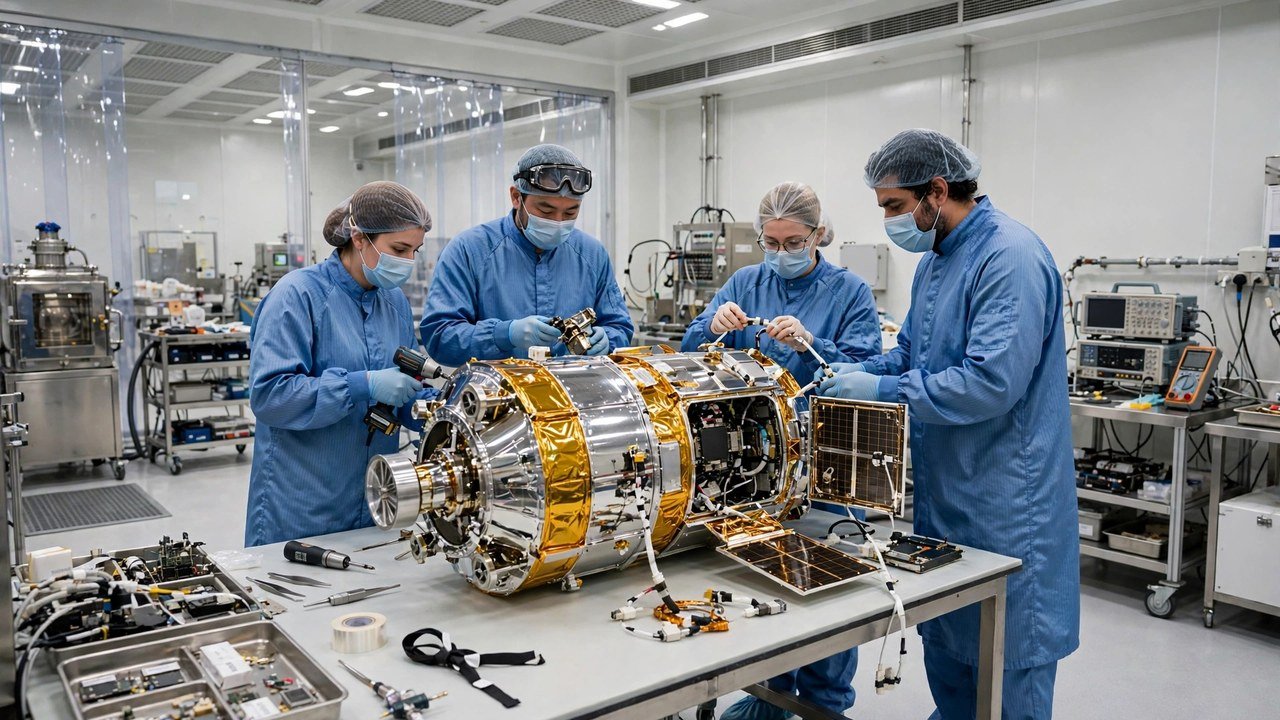
NASA is far more than astronauts. The agency employs thousands of people across a wide spread of disciplines, and understanding these fields matters because most of them are also hiring in the private space sector — where international applicants face fewer restrictions.
Engineering is the largest category: aerospace, mechanical, electrical, and systems engineers design and test spacecraft, launch vehicles, rovers, and ground infrastructure. Science roles cover planetary science, astrophysics, Earth science, and materials research. Technology and IT includes software engineering, data science, cybersecurity, and mission-operations computing. Mathematics supports trajectory analysis, modeling, and simulation. Beyond technical tracks, NASA hires in business, finance, procurement, communications, and program management — roles that keep a multi-billion-dollar agency running.
The skills profile is consistent across these fields: real project experience beats classroom theory, published or presented research carries weight, and a technical portfolio demonstrating hands-on work (prototypes, simulations, competition hardware) strengthens any application — whether to NASA, a contractor, or a foreign space agency.
NASA Salary and Federal Pay Scale
NASA civil-service salaries follow the federal General Schedule (GS) pay system, the same scale used across the U.S. government. Each vacancy announcement on USAJOBS lists its GS grade and the exact salary range for that posting, including any locality adjustment for the duty station — so you always know the pay before you apply.
As a general orientation, entry-level federal technical positions typically start in the GS-5 to GS-7 range, mid-career engineers and scientists commonly sit around GS-11 to GS-13, and senior specialists and managers reach higher grades. These figures shift each year and vary with location, so treat the numbers in each USAJOBS announcement as the authoritative source rather than any third-party roundup.
For international applicants, the more practical salary picture lies with contractors and private space companies, whose pay is set by the employer and the local labor market. Contractor roles supporting NASA programs often pay at or above comparable civil-service grades, and private aerospace employers compete aggressively for experienced engineers and scientists worldwide.
NASA Internships: What International Students Can and Cannot Apply For
NASA runs several major student programs, and the eligibility lines are clear. The OSTEM internship program — NASA’s primary student internship pathway — lists U.S. citizenship as a requirement. The Pathways internship program, which can lead to permanent federal employment, has the same citizenship requirement.
NASA has also operated an International Internship (I²) program designed for students from selected partner countries. As of the latest available guidance, NASA states that the I² program is not currently being offered. International students should not count on it reopening, though it is worth checking official NASA pages periodically for updates.
What international students can do instead: apply for internships with aerospace companies and contractors, join university research programs that partner with NASA on projects, participate in international space competitions and student satellite programs, and contribute to citizen-science projects affiliated with NASA research. All of these build the same kind of experience NASA values, without the citizenship barrier.
Best Alternatives to NASA for International Applicants
If direct NASA employment is closed to you, the global space industry is not. Several serious pathways lead to meaningful space-sector careers — and some of them involve working on NASA-adjacent projects.
Aerospace and defense contractors are the most direct alternative. Companies that build hardware, software, and services for NASA programs hire engineers, scientists, and IT professionals for that work. Eligibility depends on the employer, the role, and sometimes export-control rules — but many positions are open to foreign nationals, particularly outside the United States.
Foreign space agencies are another obvious route. Europe, Japan, India, and other nations run their own space programs with missions in Earth observation, planetary exploration, human spaceflight partnerships, and launch systems. These agencies hire through their own national processes, so check each agency’s eligibility criteria rather than assuming citizenship rules match NASA’s.
Private space companies now employ more people than many national agencies. Launch providers, satellite operators, and space startups worldwide hire internationally for engineering, manufacturing, software, and operations roles. Competition is intense, but there is no federal citizenship statute standing between you and these employers.
Universities and research institutions offer a fourth path: research positions, postdoctoral work, and faculty roles in aerospace engineering, astrophysics, and planetary science. University research frequently partners with space agencies on missions and instruments, which can put you on NASA-related projects through an academic door.
How to Apply for NASA Vacancies: Step-by-Step
Even if you are not eligible for a particular federal posting, knowing the official process helps you recognize legitimate NASA hiring and avoid scams. Here is how federal applications work:
- Search NASA vacancies on USAJOBS. The USAJOBS website is the only official portal for NASA civil-service openings. Filter by agency (“NASA”) and read each announcement carefully.
- Read the entire announcement. Every posting lists its requirements, including citizenship, education, and experience. If citizenship is required, it will say so explicitly — never apply past that line for federal posts.
- Prepare a federal-style resume. Federal resumes are far more detailed than standard one-page resumes. Include exact dates, hours worked per week, supervisor names, and quantified accomplishments for every position.
- Submit all supporting documents. Transcripts, proof of education, and any required certifications must be uploaded before the closing date. Incomplete packages are not considered.
- Monitor your application status. Track your application in USAJOBS, and be prepared for a slow federal timeline — hiring processes at government agencies commonly take several months.
For contractor and private-sector space roles, the process is the conventional one: apply through the employer’s careers page with a standard resume, and check that employer’s own eligibility terms.
Scam Safety: How to Avoid Fake NASA Job Offers
High-prestige employers attract scammers, and NASA is no exception. Protect yourself with these rules:
- Never pay for a NASA job. Real NASA federal hiring is free. Any “processing fee,” “visa fee,” or “training deposit” demanded by someone claiming to recruit for NASA is a scam.
- Verify the source. Federal NASA jobs appear only on USAJOBS. An offer that arrives by WhatsApp, Telegram, or a random email with a too-good salary is not from NASA.
- No legitimate employer hires by chat message. Real aerospace hiring involves interviews, references, and written contracts — not instant offers after a brief online conversation.
- Check the email domain. Official NASA communication comes from nasa.gov addresses. Look-alike domains with extra words or different endings are a red flag.
- Be skeptical of guaranteed visas. No recruiter can guarantee a work visa. Visa decisions belong to governments, not hiring agents.
If something feels wrong, stop and verify independently before sharing personal documents or money.
Frequently Asked Questions
Can international applicants work at NASA?
Generally no, not as direct civil-service employees. NASA’s official guidance states that with extremely rare exceptions, U.S. citizenship is required for federal NASA positions. International applicants should pursue contractors, partner agencies, or private space companies instead.
Can international students apply for NASA internships?
Not for the main programs. Both the OSTEM and Pathways internship programs require U.S. citizenship. The dedicated International Internship (I²) program for partner-country students is currently not being offered.
Does NASA hire people without engineering degrees?
Yes. While engineering and science dominate, NASA also hires in IT, mathematics, business, finance, communications, and program management. Requirements vary by position, so read each vacancy announcement carefully.
Are NASA internships paid?
NASA’s student internship programs are paid positions. Stipend amounts depend on the program and academic level, and details appear in each internship announcement.
Can international applicants work for NASA contractors?
Often yes. Contractors and industry partners that work on NASA programs set their own hiring terms, and many roles are open to foreign nationals — though some positions involve export-controlled technology with additional restrictions.
What are the best alternatives to NASA for international applicants?
Foreign space agencies, aerospace contractors, private space companies, and university research programs are the strongest alternatives. Each hires through its own process, so check eligibility terms for the specific employer rather than assuming NASA’s rules apply.
What degree is best for a space career?
Aerospace, mechanical, and electrical engineering are the most common entry points, but computer science, physics, mathematics, and materials science also lead to space careers. Hands-on project experience and research output matter as much as the degree title.
Working toward a space career as an international applicant takes a different route than the one NASA’s own job board advertises — but the destination is reachable. Focus on building real engineering and research experience, target employers whose doors are open to you, and keep an eye on official NASA channels in case programs like the International Internship return. For more international career pathways, explore our Visa Sponsorship guides and Internships section, including programs like the OECD Internship Programme.