
The United States remains one of the most popular destinations in the world for foreign workers. Every year, professionals, skilled tradespeople, healthcare workers, agricultural laborers and technology specialists from dozens of countries apply for USA work visas. Strong salaries, a huge job market and clear employer-sponsored routes make the USA an attractive goal — but the immigration system has many visa categories, and choosing the right one is the first real step.
For most USA work visas, you cannot apply on your own. A U.S. employer must first offer you a job and, in many cases, file a petition with U.S. Citizenship and Immigration Services (USCIS) before you can apply at an American embassy or consulate. The exact path depends on your occupation, qualifications and the visa type.
This guide explains how to get a USA work visa in 2026: the main visa types, who qualifies, which documents you need, what the process costs, how long it takes, and the red flags that mark a job scam. Fees and processing times change, so always confirm the latest figures on official U.S. government sources before you pay anything.

What Is a USA Work Visa?
A USA work visa is official permission for a foreign national to work legally in the United States for an approved employer — unlike a tourist visa, which does not allow employment. Visas fall into two broad groups: temporary (non-immigrant) visas for a specific job over a limited period, and employment-based immigrant visas tied to permanent residence.
Temporary vs. Permanent USA Work Visas
| Feature | Temporary (Non-Immigrant) Visa | Employment-Based Immigrant Visa |
|---|---|---|
| Purpose | Work in the USA for a fixed period | Live and work permanently in the USA |
| Examples | H-1B, H-2A, H-2B, L-1, O-1, TN | EB-1, EB-2, EB-3 |
| Tied to employer | Yes — usually one specific employer | Sponsoring employer (some flexibility later) |
| Green Card path | Possible through a separate process | Directly leads to permanent residence |
| Family | Dependents may join on derivative visas | Family included in the application |
The Main USA Work Visa Categories at a Glance
| Visa | Best For | Key Point |
|---|---|---|
| H-1B | Professionals in specialty occupations | Employer sponsorship + bachelor’s degree typical; annual cap applies to most cases |
| H-2A | Temporary agricultural workers | Seasonal farm work with employer sponsorship |
| H-2B | Temporary non-agricultural workers | Hospitality, landscaping, seafood processing and similar seasonal roles |
| L-1 | Employees of multinational companies | Transfer from an overseas office to a U.S. office |
| O-1 | People with extraordinary ability | Requires proof of national or international recognition |
| TN | Canadian and Mexican professionals | Only for listed professions under the USMCA agreement |
| EB-1 / EB-2 / EB-3 | Workers seeking a Green Card | Permanent residence through employer sponsorship |
H-1B Visa: The Route for Skilled Professionals
The H-1B is the best-known USA work visa for professionals. It covers specialty occupations — jobs that normally require a bachelor’s degree or equivalent specialized knowledge, such as IT, engineering, finance, architecture and healthcare roles.
Employer sponsorship is mandatory, the role must qualify as a specialty occupation, and most petitions are subject to an annual numerical cap with a selection process. Because the cap fills fast, planning ahead with your employer matters more here than in any other category.
H-2A and H-2B Visas: Seasonal and Temporary Work
The H-2A visa is for temporary agricultural work — fruit picking, vegetable harvesting, dairy, livestock and crop production. Work is seasonal, the employer sponsors the worker, and housing and transportation may be provided depending on program rules and employer obligations.
The H-2B visa covers temporary non-agricultural jobs: hotels and resorts, restaurants, landscaping, seafood processing, construction and amusement parks. Both visas authorize work for a limited period with a specific employer, and both require the employer to complete the petition steps first. For the farm route specifically, see our guide to H-2A farm worker jobs in the USA.
L-1, O-1 and TN Visas: Transfers, Top Talent and North American Professionals
The L-1 visa lets multinational companies transfer managers, executives and employees with specialized knowledge from an overseas office to a U.S. office — it is an internal transfer tool, not a visa you can get with a new employer.
The O-1 visa is for individuals with extraordinary ability or achievement in science, education, business, arts, athletics or entertainment. Applicants must document sustained national or international recognition — awards, publications and media coverage.
The TN visa is available only to Canadian and Mexican citizens in professional occupations covered by the USMCA agreement.
Green Card Routes: EB-1, EB-2 and EB-3 Categories
Workers who want permanent residence apply under employment-based immigrant categories. EB-1 covers people with extraordinary ability, outstanding professors and researchers, and certain multinational executives. EB-2 covers professionals with advanced degrees or exceptional ability. EB-3 covers skilled workers, professionals and certain other workers — usually requiring a sponsoring employer and, in many cases, a labor certification proving no qualified U.S. worker is available for the role.
Basic Eligibility Requirements
- Valid passport: it must remain valid for the period required under U.S. immigration rules.
- Genuine job offer: most USA work visas start with a real offer from a U.S. employer.
- Employer sponsorship: for many categories, the employer files a petition with USCIS and receives approval before you apply for the visa.
- Relevant qualifications: a degree, professional license, vocational training or skilled work experience, depending on the job.
- English ability: there is no universal English test for most employment visas, but employers commonly expect enough English to do the job.
- Medical and security clearance: a medical exam where applicable, background checks, the embassy interview, and biometrics if requested.
Documents You Need to Prepare
| Document | Why It Matters |
|---|---|
| Valid passport | Identity and travel document; must meet validity rules |
| Job offer letter / employment contract | Proves the role, salary, location and conditions |
| Approved employer petition | Required for most temporary work visas before the visa interview |
| Visa application confirmation page | Proof you completed the online application |
| Passport-size photographs | Must meet U.S. visa photo specifications |
| Educational certificates and transcripts | Prove you meet the qualification requirements |
| Professional licenses | Required for regulated jobs such as nursing — see registered nurse jobs in the USA with visa sponsorship |
| Employment reference letters and CV | Document your work history and experience |
| Police certificates | Requested in some cases for security screening |
| Medical examination results | Where the visa category requires one |
| Fee payment receipts | Proof that all applicable fees were paid |
How to Apply for a USA Work Visa: 10 Steps
While details differ by category, most employer-sponsored USA work visas follow this sequence:
- Find a U.S. employer willing to hire foreign workers. Focus on industries with real demand: healthcare, IT, engineering, agriculture, hospitality, construction, manufacturing, transportation and education. Verify the employer is legitimate before you engage.
- Receive a formal job offer. A genuine offer states the job title, salary, location, hours, benefits, contract length and conditions. Read it carefully before accepting.
- The employer files the petition with USCIS. For most temporary work visas the employer submits the required petition and related certifications. You generally cannot file this yourself.
- Wait for petition approval. Timing depends on the visa category, workload, whether extra evidence is requested, and whether the employer uses premium processing (which speeds up petition review only — not the embassy interview).
- Complete the online visa application. Print the confirmation page for the interview. Every answer must match the employer’s petition exactly.
- Pay the visa fee. Amounts depend on the visa category, nationality and reciprocity agreements — always confirm the current fee from official sources.
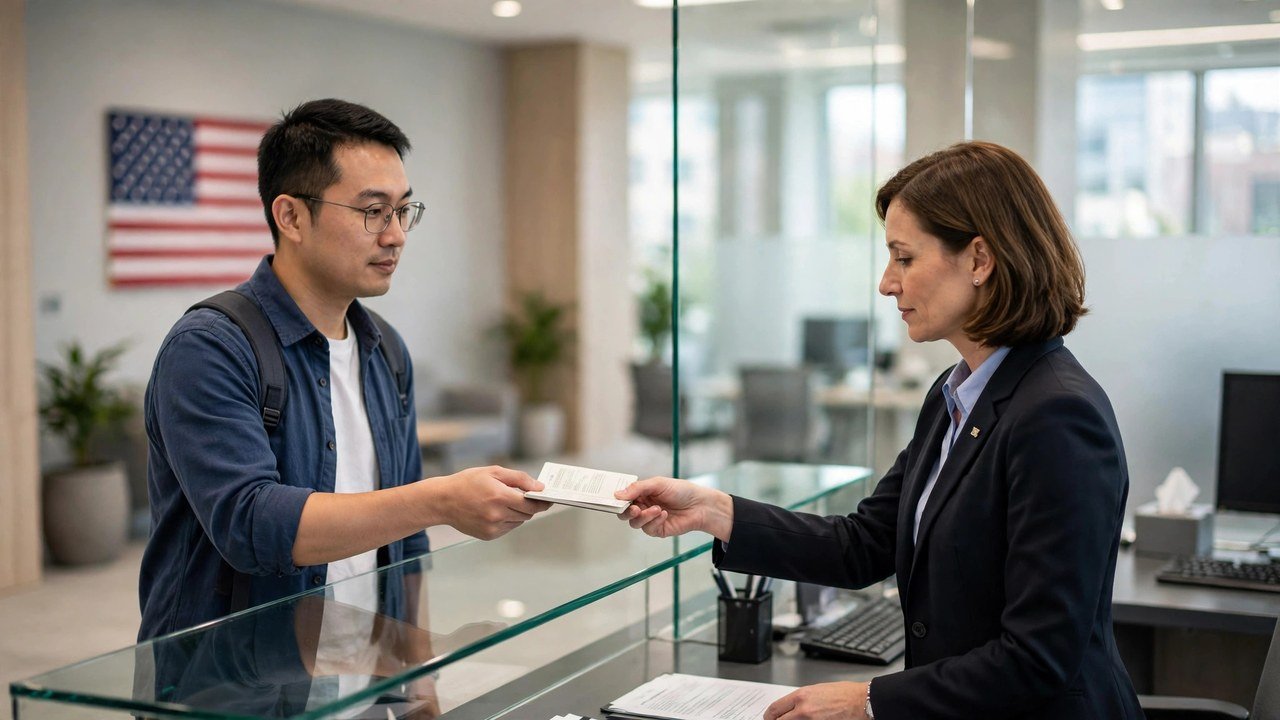
- Schedule the visa interview. Interviews take place at the U.S. embassy or consulate for your place of residence. Slots fill quickly in busy seasons, so book early.
- Attend the interview. Bring every required document. The officer may ask about your employer, job duties, qualifications, employment history and future plans. Answer honestly and consistently.
- Receive your visa. If approved, your passport is returned with the visa after processing. Check that all personal details are correct.
- Travel to the USA. A visa lets you travel to a U.S. port of entry, where a Customs and Border Protection (CBP) officer makes the final decision on admission. Carry your passport, visa, employment documents and employer contact details in your hand luggage.
How Much Does a USA Work Visa Cost?
| Cost Item | Who Usually Pays |
|---|---|
| Visa application fee | Applicant — amount varies by category and nationality |
| Petition filing fees | Usually the employer, where a petition is required |
| Medical examination | Applicant, where applicable |
| Document translation | Applicant |
| Police certificates | Applicant |
| Passport issue or renewal | Applicant |
| Visa issuance / reciprocity fees | Applicant, for certain nationalities |
| Travel to the interview and the USA | Applicant (some employers offer relocation help) |
Important: never rely on unofficial websites for fee amounts. Fees change, and scammers publish fake fee lists to justify the payments they demand. Confirm every fee on the official U.S. State Department or USCIS websites.
USA Work Visa Processing Time
Processing times vary widely: the employer’s petition, embassy appointment availability, your country of application, security checks and document completeness all affect the timeline. Premium processing can shorten the petition stage only. A realistic plan starts several months before your intended travel date.
In-Demand Jobs for Foreign Workers in the USA
- Healthcare: registered nurses, physicians, medical technologists, physical therapists, caregivers.
- Information technology: software developers, cybersecurity specialists, data analysts, cloud engineers, AI specialists.
- Engineering: civil, mechanical, electrical and industrial engineers.
- Skilled trades: electricians, welders, HVAC technicians, plumbers, carpenters.
- Transportation: truck drivers, delivery drivers, logistics coordinators.
- Hospitality: hotel staff, restaurant managers, chefs, housekeepers, seasonal resort workers.
- Agriculture: farm workers, fruit pickers, crop and livestock workers.
How to Improve Your Chances of Visa Approval
No one can guarantee a visa, but these practices consistently strengthen applications:
- Apply for the correct visa. A wrong category is one of the most common avoidable mistakes.
- Submit accurate, consistent documents. Every form and certificate should be complete, current and consistent with the employer’s petition.
- Prepare for the interview. Review your resume, job duties, employer details and contract so you can answer confidently.
- Keep copies of everything. Forms, receipts, the contract and approval notices can matter during travel and future immigration steps.
Scam Safety: Red Flags to Avoid
Fake USA job offers are one of the biggest risks foreign workers face. Legitimate employers follow established procedures and cannot guarantee visa approval. Walk away if you see any of these:
- Anyone who guarantees your visa will be approved.
- Demands for large upfront payments before any official process begins.
- Requests for sensitive personal or banking information without verifiable employer identity.
- Job offers that seem unrealistic — very high salary for very low requirements.
- Pressure to decide or pay immediately.
Frequently Asked Questions
Can I get a USA work visa without a job offer?
For most employment-based visas, no. A qualifying job offer — and usually an employer petition filed with USCIS — is the foundation of the application.
Which USA work visa is easiest to get?
There is no “easy” visa. For seasonal farm work, the H-2A is straightforward for eligible workers; for degree-holding professionals, the H-1B is the main route but faces an annual cap. The right visa is the one you actually qualify for.
How long does the USA work visa process take?
It varies from a few months to over a year depending on the visa category, USCIS workload, embassy appointment availability and security checks. Start several months before your planned travel date.
Can I bring my family to the USA on a work visa?
Many categories allow spouses and unmarried children under 21 to join you on derivative visas; work rights for spouses vary by category.
Can I change employers after getting my USA work visa?
Most temporary work visas are tied to the sponsoring employer. Changing jobs usually means the new employer must file a fresh petition and you may need a new visa. Check the rules for your specific category before resigning.
Is there an age limit or English test for a USA work visa?
There is generally no fixed age limit, and there is no universal English-language test for most employment visas. However, employers typically expect enough English to perform the job, and some roles have their own requirements.
Can a USA work visa lead to a Green Card?
Yes, in many cases. Some workers transition from temporary visas to employment-based immigrant categories (EB-1, EB-2, EB-3) with an employer’s support, though the process has its own requirements and waiting times.