

Canada is building homes, roads, hospitals and transit lines at a record pace, and many regions simply do not have enough local workers to finish the job. That shortage is why construction worker jobs in Canada with visa sponsorship keep appearing for foreign workers in 2026. Employers in several provinces are hiring labourers, carpenters, roofers and equipment operators from abroad.
But let us be clear from the start. There is no single “construction visa” in Canada, and no employer can guarantee you a work permit. Sponsorship works through a legal process, and the employer — not the worker — takes the first step.
This guide explains how that process works, what the jobs pay, the official 2026 LMIA wage thresholds, and the exact steps to apply safely. If you want to browse more openings while you read, see our full list of jobs in Canada with visa sponsorship.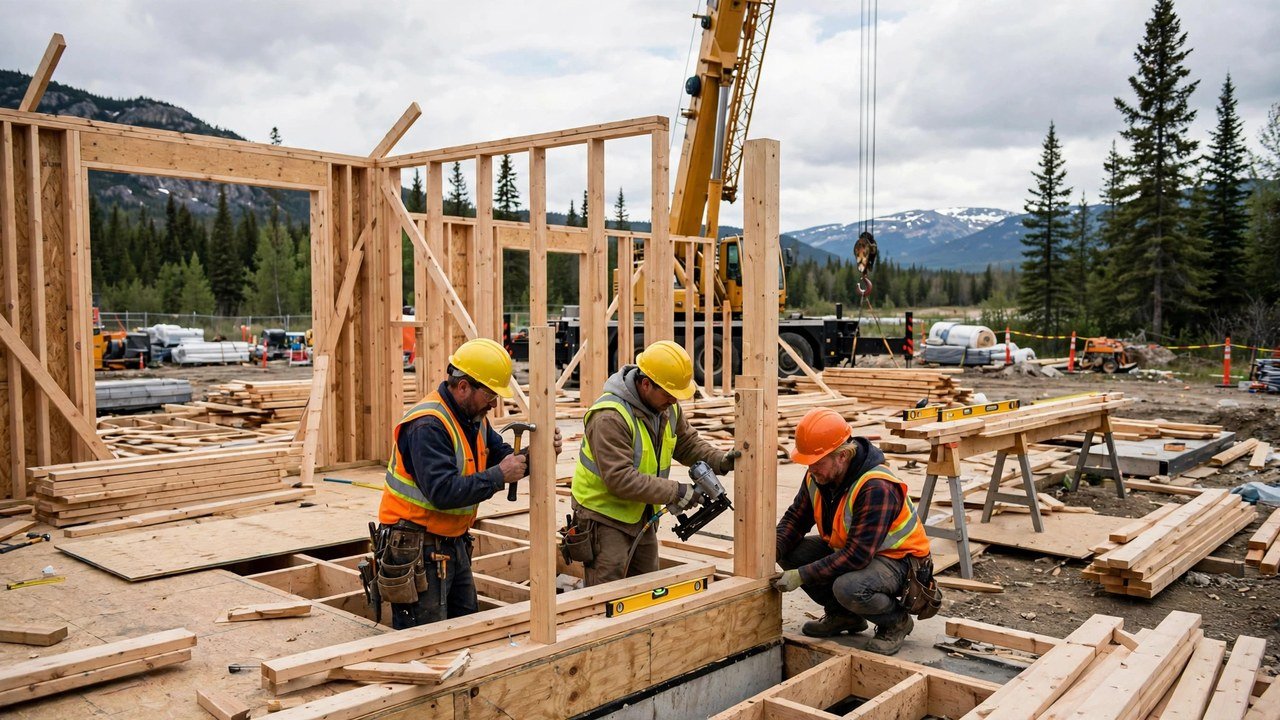
Job Overview: Construction Worker Jobs in Canada with Visa Sponsorship
Most foreign construction workers enter Canada through the Temporary Foreign Worker Program (TFWP). Under this program, a Canadian employer who cannot find a local worker can ask the government for permission to hire from abroad. That permission is called an LMIA (Labour Market Impact Assessment).
Once the LMIA is approved, the employer gives you a job offer and supporting documents. You then apply to IRCC (Immigration, Refugees and Citizenship Canada) for an employer-specific work permit. The permit normally ties you to that one employer and that one job.
| Detail | Information |
|---|---|
| Sector | Construction — residential, commercial and infrastructure projects |
| Main roles | Labourer, carpenter, roofer, concrete worker, drywall installer, heavy equipment operator |
| Job type | Full-time |
| Work permit type | Employer-specific work permit under the TFWP |
| LMIA | Usually required — the employer applies, not the worker |
| Main provinces | Ontario, Alberta, British Columbia, Saskatchewan, Manitoba |
| Experience | Previous construction experience preferred; varies by role |
Important: an LMIA is not a visa. It is only the employer’s approval to hire a foreign worker. You still need your own work permit from IRCC, and IRCC makes the final decision. Anyone who sells you an “LMIA visa” is misleading you.
In-Demand Construction Roles in Canada
Demand is strongest for hands-on site roles. These are the positions employers most often try to fill with foreign workers.
Construction Labourer
Labourers are the backbone of every site. They load and move materials, dig, mix and carry supplies, clean work areas and help the skilled trades. It is the most common entry point for foreign workers, and some employers hire labourers with limited experience if they are fit, reliable and ready to learn.
Carpenter
Carpenters build and install wooden structures, framing, formwork, stairs, doors and finishes. It is skilled work, so employers usually expect real site experience and the ability to read basic drawings. Formal trade training or certification can be required, depending on the province and the employer.
Roofer
Roofers install and repair shingles, metal roofing and flat-roof systems. The work is physical and weather-dependent, and experienced roofers are hard to find in many regions, which keeps demand steady through the building season.
Concrete Worker
Concrete workers pour, place, level and finish concrete for foundations, floors, sidewalks and large structures. Experience with forms, screeding and finishing tools is a strong advantage, especially on big infrastructure and high-rise projects.
Drywall Installer
Drywall installers measure, cut and fit boards, then tape and finish joints so walls are ready for paint. This role is in constant demand in housing construction, where speed and clean finishing work matter.
Heavy Equipment Operator
Operators run excavators, bulldozers, loaders and cranes. These are among the better-paid site jobs, but employers expect proven machine experience, and some machines or provinces require specific licences or certification. If you have documented equipment hours, highlight them — they make your application stand out.
Salary & LMIA Wage Thresholds for Construction Worker Jobs in Canada
So, how much do construction worker jobs in Canada with visa sponsorship actually pay? The honest answer is that it depends on your trade, province, experience and employer. A general labourer earns noticeably less than a certified carpenter or an equipment operator, and overtime, union agreements and guaranteed hours change the real picture. Always check the hourly wage, weekly hours, overtime rate, deductions and any accommodation costs before you accept an offer — not just the headline figure.
What we can give you exactly is the official framework employers must follow. For 2026, the Canadian government updated the LMIA provincial wage thresholds (updated 17 July 2026). These thresholds decide whether a job is processed under the high-wage or the low-wage stream of the TFWP. The wage offered must also match the prevailing wage for that occupation in that region.
Read this table carefully: these numbers are stream thresholds — the line between “high-wage” and “low-wage” processing. They are not promised or guaranteed salaries.
| Province / Territory | 2026 LMIA Wage Threshold (per hour) |
|---|---|
| Alberta | $37.50 |
| British Columbia | $38.40 |
| Manitoba | $31.33 |
| New Brunswick | $31.73 |
| Newfoundland and Labrador | $33.60 |
| Nova Scotia | $31.96 |
| Ontario | $36.92 |
| Prince Edward Island | $31.20 |
| Quebec | $36.00 |
| Saskatchewan | $34.62 |
| Yukon | $45.60 |
| Northwest Territories | $48.00 |
One more rule matters. Low-wage hiring under the TFWP is normally capped as a share of an employer’s workforce at each work location. Construction is one of the sectors where a higher cap of up to 20% can apply in certain cases, which is one reason construction employers can sometimes hire more foreign workers than other low-wage sectors.
Requirements for Construction Worker Jobs in Canada with Visa Sponsorship
Exact requirements change from employer to employer, but most ask for the following:
- Work experience: Previous construction experience is a big advantage. Skilled roles like carpentry and equipment operation usually require proven experience; some labourer roles are more flexible.
- Technical qualifications: Trade training, apprenticeships or certificates may be required for skilled roles, and rules differ by province.
- Language: You need enough English or French to understand instructions and work safely. The exact level depends on the employer.
- Physical fitness: Site work means lifting, climbing and long hours outdoors in all weather.
- Safety awareness: Knowing basic site safety rules matters. Safety certificates strengthen your application.
- Teamwork and reliability: Employers repeatedly name these two traits — showing up on time, every day, is a skill in itself.
- Documents: A valid passport, and later a medical exam and police/background checks as IRCC requires.
A degree is not required for most site roles. What employers really check is whether you can do the job safely from day one.
Top Provinces for Construction Jobs in Canada
Ontario is the biggest market. Housing growth around Toronto and other cities keeps labourers, carpenters, drywall installers and concrete workers in demand all year.
Alberta combines housing construction with large industrial and energy projects. Wages are competitive, and the LMIA threshold of $37.50 per hour reflects a strong labour market.
British Columbia has one of the highest thresholds at $38.40 per hour, with steady work in Vancouver and growing cities. Living costs are high, so weigh the wage against rent.
Saskatchewan and Manitoba hire for housing, agriculture-related building and infrastructure. Their thresholds are lower — $34.62 and $31.33 — but so is the cost of living, and smaller communities sometimes offer accommodation, which can make a major difference to your savings. You can explore more openings in our Jobs in Canada category.
How to Apply for Construction Worker Jobs in Canada with Visa Sponsorship
- Identify your occupation. Decide which role matches your real skills — labourer, carpenter, roofer, concrete worker, drywall installer or equipment operator — and apply only for that trade.
- Prepare a Canadian-style resume. Keep it short and skills-focused. No photo, no personal details like age or marital status. List your experience, tools, machines and certificates clearly.
- Search for genuine employers. Use official and trusted sources such as Job Bank Canada, company career pages and well-known job boards. Be careful with random social media ads.
- Check the job requirements. Read the full posting: experience, language, location, hours and wage. Apply only when you honestly meet most of the requirements.
- Ask about LMIA support. Politely confirm whether the employer is willing and able to support an LMIA application for the role. A genuine employer will explain the process openly.
- Receive a genuine job offer. You should receive a written offer and contract with the wage, hours and duties stated. Never pay anyone for an offer letter.
- Apply for your work permit. After the employer gets the LMIA (if required), you submit your work permit application to IRCC with the offer and documents, then wait for IRCC’s decision before travelling.
PR Pathways: From a Work Permit to Permanent Residence
A work permit is temporary, but it can be the first step toward staying in Canada long-term. Two main routes matter for construction workers.
Provincial Nominee Programs (PNP): Most provinces run their own immigration programs and regularly select workers in occupations their local market needs — including construction trades. A provincial nomination either supports a work permit or adds a powerful boost toward permanent residence.
Express Entry: Canada’s points-based system for skilled workers also invites candidates from the skilled trades. Canadian work experience, a trade certificate and stronger language scores all raise your ranking. In short: the experience you gain on a Canadian site today can become your PR application tomorrow — but nothing is automatic, and you must still qualify and be selected.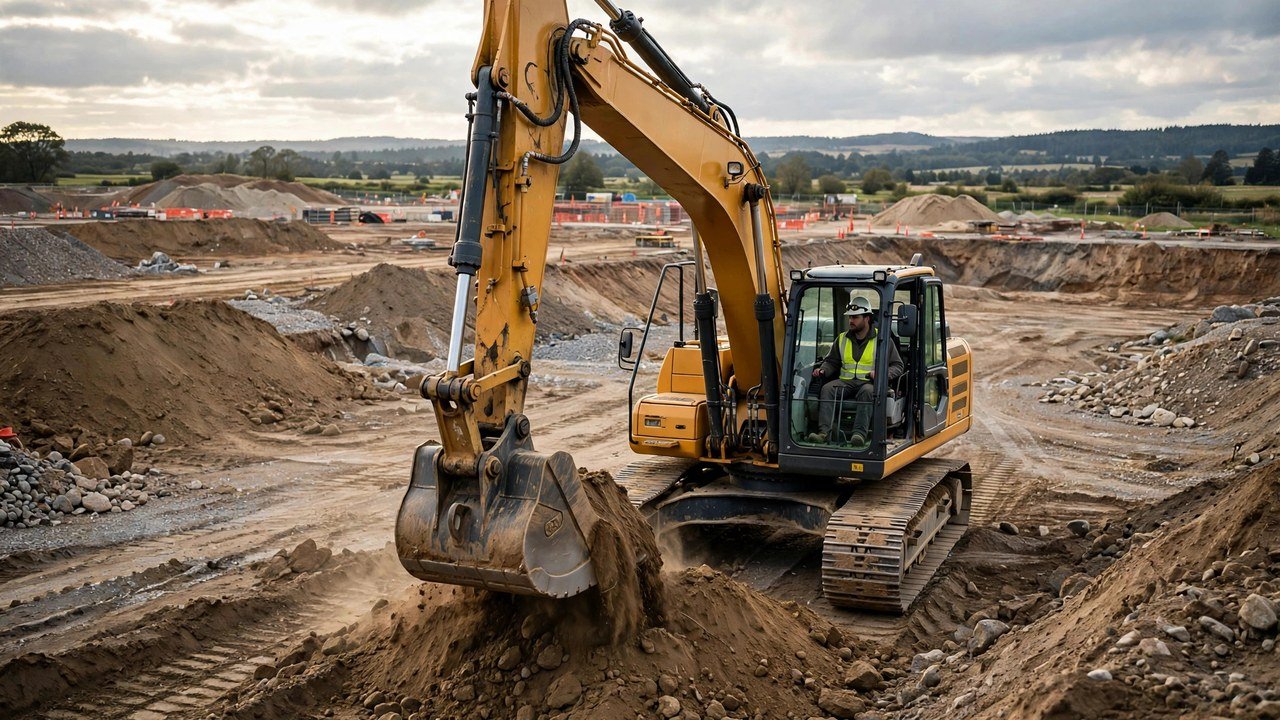
Frequently Asked Questions
Can foreign construction workers really get visa sponsorship in Canada in 2026?
Yes, when a Canadian employer cannot find a local worker, they can hire through the Temporary Foreign Worker Program. The employer normally needs an approved LMIA first, and you then need a work permit from IRCC. Sponsorship is possible — but it is never guaranteed.
Who applies for the LMIA — me or the employer?
The employer applies. The LMIA proves that hiring a foreign worker will not hurt the Canadian labour market. As the worker, you cannot apply for an LMIA yourself, and you should never pay a fee to “buy” one.
Is an LMIA the same as a work visa?
No. An LMIA is not a visa and it does not let you work in Canada by itself. It is one document in the process. You still need your own work permit, approved by IRCC.
How much do construction workers earn in Canada?
Pay varies a lot by trade, province and experience. General labourers earn less than certified tradespeople and equipment operators. The 2026 LMIA thresholds in the table above — from $31.20 per hour in Prince Edward Island to $48.00 in the Northwest Territories — show how wage levels differ by region, but they are processing thresholds, not promised salaries. Always confirm the exact wage in your written offer.
Do I need Canadian experience to get hired?
Not always. Canadian experience helps, but many employers hire experienced workers from abroad, especially for labourer and high-demand trade roles. Strong foreign experience, certificates and machine skills can make up for having no Canadian record.
Can I change employers after I arrive in Canada?
Usually not freely. A TFWP work permit is employer-specific, so you generally need a new LMIA and a new work permit before working for someone else. Do not quit and start another job without checking the rules — working for the wrong employer can put your status at risk.
How do I avoid construction job scams?
Follow one simple rule: never pay for a job, an LMIA or a visa. Real employers do not charge workers for offer letters, and no agent can guarantee a permit. Verify the company, use official Government of Canada information, and walk away from anyone who pressures you to pay quickly.
Conclusion
Construction worker jobs in Canada with visa sponsorship are real in 2026, driven by genuine labour shortages across Ontario, Alberta, British Columbia, Saskatchewan and Manitoba. The path is clear: find a genuine employer, let them handle the LMIA, and apply for your work permit through IRCC with honest documents.
Prepare a strong Canadian-style resume, use the wage thresholds above to judge offers realistically, and keep your expectations grounded. Do that, and you give yourself the best possible chance of building a future — literally — in Canada.